

How to Choose an Eco-Friendly Sofa: Complete Guide
What Makes a Sofa Eco-Friendly?
An eco-friendly sofa is one where the environmental impact has been considered across the whole lifecycle, from the materials used in the frame and cushioning, to the fabric treatment, to how it is shipped, and how long it actually lasts before needing to be replaced. No single element makes a sofa truly sustainable. It’s the combination of responsibly sourced materials, low-toxicity construction, and long-lasting design that creates a genuinely sustainable piece.
Anabei's sustainable collection is built around exactly this approach. PFC-free and Oeko-Tex certified fabrics, cosmetic downcycled from plastic bottles, carbon-neutral shipments, non-toxic recycled materials, and a modular design that extends the life of the sofa rather than sending it to landfill when the style changes.
Understanding Sustainable Materials for Sofas
The materials inside and outside a sofa tell most of the sustainability story. For fabric, the key questions are whether it contains chemicals like PFCs or PFAS forever, whether it is certified safe for indoor use, and whether it can be cleaned without harsh chemical treatments. Anabei's performance fabrics are eco-engineered to be liquid resistant without the use of PFCs or PFAS, and are Oeko-Tex certified, meaning they have been tested and proven free of harmful levels of toxic substances.
For cushion fill, CertiPUR-US certification is the standard to look for. It confirms that foam has been tested for emissions, content, performance, and durability, and is free of ozone-depleting substances. Anabei's foam cushions carry this certification, and the cosmetic down used in the frame duvet upcycles hundreds of plastic bottles per sofa.

Eco-Friendly Frame Construction: What to Look For
Wood frames are the traditional choice, but they are not automatically sustainable. Unsustainably sourced wood contributes to deforestation, and composite wood products can off-gas formaldehyde if not certified compliant. Look for FSC-certified wood, which confirms the source is responsibly managed.
A powder-coated steel frame, like the one used across Anabei's entire collection, sidesteps the wood question entirely. Steel is recyclable, does not crack or warp over time, and does not require the treatments that wood often needs to hold up. It also means the sofa lasts longer, which is one of the most straightforward ways to reduce environmental impact.
Safe, Low-Toxic Fabric and Cushion Options
The biggest concern with sofa fabrics is chemical treatments. Many conventional upholstery fabrics are treated with PFAS-based compounds to achieve stain and water resistance. These are known as forever chemicals because they do not break down in the environment or in the body.
Anabei's fabrics achieve liquid and stain resistance without any of these chemicals. The nontoxic moisture barrier is engineered without PFCs or PFAS, and the manufacturing process uses recycled water. For households with children, pets, or anyone with chemical sensitivities, this is a meaningful distinction.

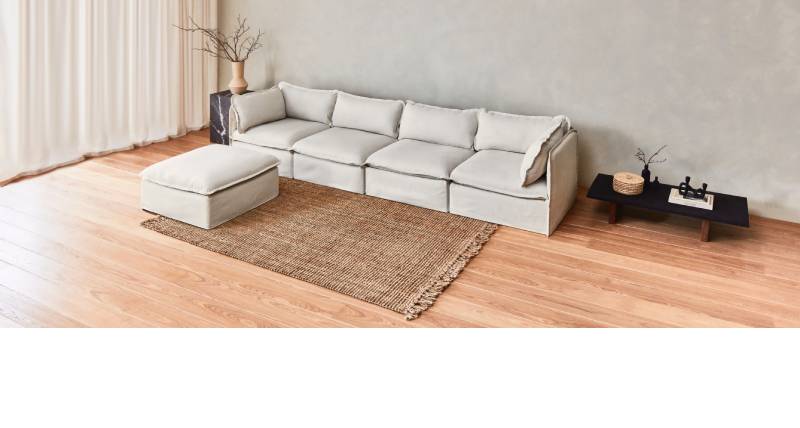
Photo by Anna De Souza - Modular Washable 3-Seater + Ottoman in Ash | Memorix+ Seat | Contour Pillow
Certifications to Check When Buying an Eco-Friendly Sofa
Certifications cut through vague sustainability marketing. The most important ones to look for when buying an eco-friendly sofa are Oeko-Tex, which certifies fabrics are free of harmful chemical levels; CertiPUR-US, which certifies foam meets standards for emissions and content; FSC, which applies to wood sourced from responsibly managed forests; and GreenGuard Gold, which certifies low chemical emissions for indoor air quality.
Anabei holds Oeko-Tex certification across its fabric range and CertiPUR-US certification for its foam. The carbon-neutral shipping program is also verified, not just a marketing claim.
Durability and Longevity: Key Factors in Sustainability
The most sustainable sofa is the one that does not need to be replaced. A sofa that lasts ten to fifteen years with regular use has a fraction of the environmental footprint of one that gets replaced every four or five years. Anabei's performance fabrics are durability tested for up to 100,000 double rubs, and the powder-coated steel frame is designed to last without structural compromise.
The modular and slipcover design adds another layer of longevity. When a cover wears out or a style preference changes, replacing the slipcover costs a fraction of replacing the whole sofa. That means less furniture going to landfill and less material being produced to replace it.
How to Reduce Your Sofa's Environmental Impact
Beyond choosing the right sofa to begin with, a few habits extend its life and reduce ongoing environmental impact. Rotating cushions regularly distributes wear evenly. Washing covers on cold and hanging them to dry, as recommended for Anabei's covers, uses less energy than a hot wash and dryer cycle. Choosing a sofa sized right for the space from the start avoids premature replacement due to poor fit.
Buying modular also helps. Being able to add a module rather than buying a whole new sofa when seating needs grow is a measurably lower-impact choice.

Tips for Choosing an Affordable Eco-Friendly Sofa on a Budget
The perception that sustainable furniture always comes at a premium is not entirely accurate. An affordable, eco-friendly sofa is possible when the focus is on longevity, washability, and certifications rather than premium brand markup. Anabei's collection starts at $699 and includes all the sustainability credentials outlined above, including Oeko-Tex certification, CertiPUR-US certified foam, PFC-free fabrics, and carbon-neutral shipping.
Ordering a free swatch kit before buying is a practical step that reduces the chance of returning the sofa, which also has its own environmental footprint. Getting the choice right the first time is always the more sustainable outcome.

Modular Washable 2-Seater Sectional in Mist | Memorix+ Seat | Contour Pillow
FAQs
1. What materials are best for eco-friendly sofas?
Recycled or upcycled fill materials, PFC-free performance fabrics, Oeko-Tex certified upholstery, and CertiPUR-US certified foam are the most reliable markers of genuinely sustainable materials. Steel frames are more recyclable than composite wood alternatives and tend to last longer without needing replacement.
2. Are eco-friendly sofas more expensive?
Not necessarily. You can still find an affordable, eco-friendly sofa when a brand prioritizes certifications and responsible materials over a premium price. Anabei's collection starts at $699, and each material, manufacturing, and shipping has verified sustainability credentials.
3. How do I know if a sofa is non-toxic?
Look for Oeko-Tex certification on the fabric, which means it has been tested and is free of harmful levels of chemicals. CertiPUR-US on the foam means it meets emissions and content standards. Brands that specifically say PFC-free and PFAS-free fabric treatments are making a verifiable, meaningful commitment, not a general sustainability claim.
4. Which certifications should I look for in sustainable furniture?
Among the most important certifications are Oeko-Tex for fabric safety, CertiPUR-US for foam, and GreenGuard Gold for interior air quality. A brand certified in multiple parts of the product is a more reliable, sustainable choice than one with a single certification.
5. Is recycled fabric durable for everyday use?
Yes when it is a performance grade. Anabei's fabrics are made with recycled and upcycled materials that are durability tested for up to 100,000 double rubs, and are liquid and stain resistant. Recycling does not mean lower quality when the manufacturing standards are high and the fabric is certified.