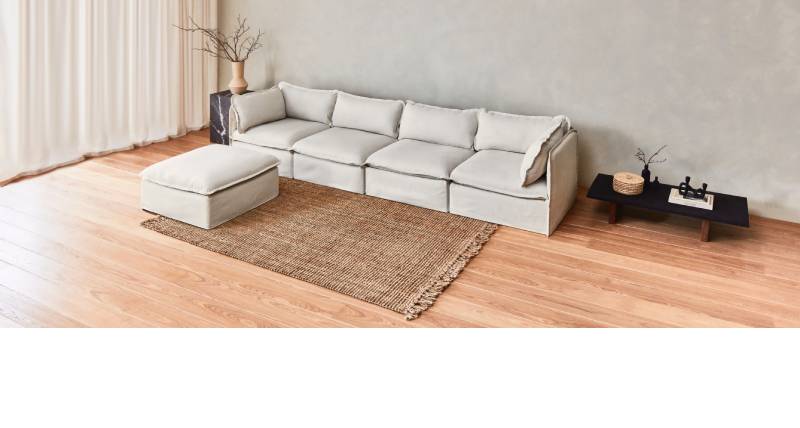
A build-your-own sofa system lets you create your own configuration by picking individual pieces. This approach gives you control over size and setup rather than purchasing a predefined configuration. Modular construction gives you personalized solutions with more flexibility that standard sofas cannot.
What Build Your Own Sofa Means
Building your own sofa means picking separate pieces that connect to form complete seating. Unlike traditional sofas sold as single units, these systems break seating into individual parts.
Each module does a specific job. Armless seats provide center seating. Corner pieces create turns. End units provide armrests. You choose which modules you need and how many, then arrange them to your liking. The pieces are connected through brackets, clips, or interlocking parts to create stable setups.
This concept is completely different from buying a pre-assembled couch. With a build your own collection, you have complete control over which modules you want and how you want to arrange them. Every element is chosen intentionally.
Key benefits include choosing the final size and shape of your couch, the ability to fit unusual room layouts or tight spaces, the option to start small and expand later, easier delivery through narrow doorways and staircases, and the replacement of individual sections if damage happens.
This collection is really designed for households with specific space limits, those who move often, or anyone who values furniture flexibility over time.
How to Select Sofa Modules Step by Step
Building a custom sofa requires understanding available module types and how they function. Each part adds specific abilities to the final setup.
Seats
Armless seat modules form the foundation of most setups. These pieces provide seating without end structures. Standard seat modules typically measure 30 to 36 inches wide and 35 to 40 inches deep.
The number will impact the overall sofa length. More seats create longer straight sections. Usually, each seat fits one person comfortably.
Most households start with two to three seat modules, then add more based on family size and available space.
Arm and End Chairs
Arm modules cap the ends of seating runs, providing completion and comfortable elbow rests. You can put arms at both ends for a traditional sofa look, one end for space-efficient layouts, or neither end when connecting to other modules.
Corners
Corner modules create 90-degree turns, transforming straight sofas into L-shaped or U-shaped setups. These pieces measure about 36 by 36 inches.
Corners enable sectional layouts in room corners, create conversation-friendly seating, maximize seating in square rooms, and add visual interest beyond straight lines.
When planning a build-your-own sectional couch, corners become essential parts. They determine whether the setup fits against walls or floats in open spaces.
Ottomans
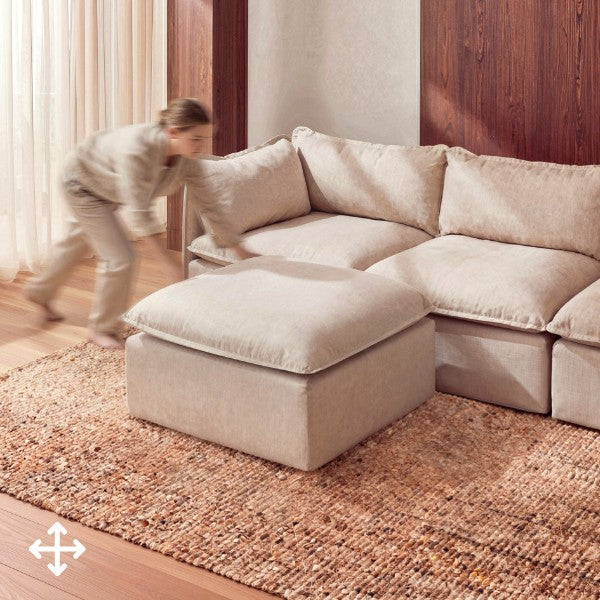
Ottoman modules are quite the versatile piece. They tend to match the sofas’s seat high and width, but don’t offer any back support
These modules can be used as footrests, so you can prop your legs up and lounge, use as extra seating during gatherings, a coffee table alternative if you top with a tray, or an extension when placed in line with the seats.
Some build-your-own sofa systems include storage ottomans, adding hidden compartment functionality. These work well in small spaces needing multi-purpose furniture.
Choosing Size, Shape, and Layout
Setup planning determines how well the custom sofa fits and works in your space. Three primary layout types fit different room shapes and household needs.
Straight Layouts
A straight layout means all modules are set up in a single line - a very traditional, classic sofa setup. This works best in rectangular rooms with one wall, spaces where the sofa faces an entertainment center, and rooms with simple walking patterns.
These layouts can typically range 80-120 inches long, but with a build your own collection, this will vary depending how many seats you want available.
L-Shaped Layouts
L-shaped setups use corner modules to create right angles. This arrangement suits square or open-concept living areas, corner placement that maximizes floor space, rooms needing defined conversation zones, and households wanting to separate activity areas.
Plan L-shaped layouts by determining which wall gets the longer section. The longer side typically holds three or four seats, while the shorter return uses two or three seats. The corner piece connects them.
U-Shaped Layouts
U-shaped setups consist of two corner modules to create a literal u-shape, with seating on three sides. This layout is best for large rooms with significant floor space, households that entertain often, and families looking for maximum seating.
It’s important to note that this type of configuration requires substantial space, on average 12 by 15 feet, depending on how many modules you’d like to use. These are best in open floor plans, finished basements or primary living areas where seating takes priority.
Fabric and Cushion Customization
Material selection personalizes the sofa's appearance and determines how much care it needs. Most build-your-own sofa systems offer multiple fabric and cushion options.
Fabric types include performance textiles that resist stains and moisture for busy households, woven fabrics that feature flat woven micro-denier construction with cross-dye technique for added texture and depth, velvet options that deliver soft texture and rich visual depth, and 100% polyester materials that provide fade-resistant durability while staying comfortable.
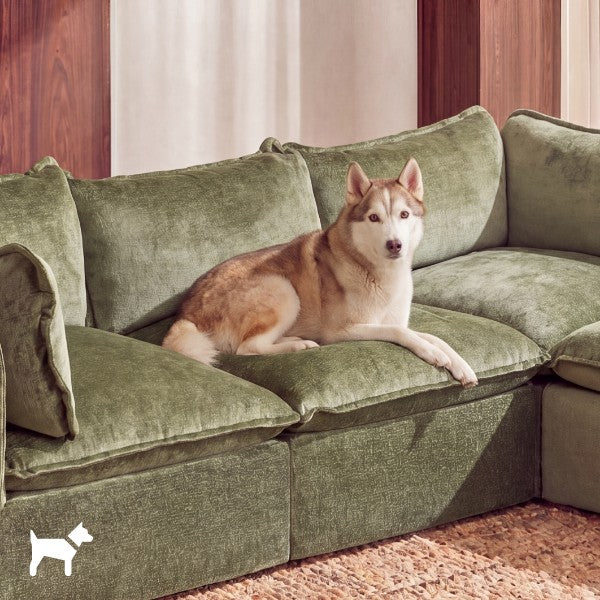
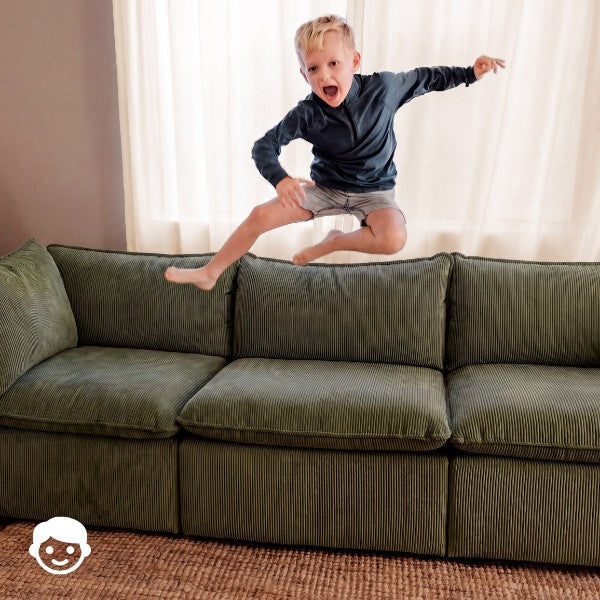
When choosing a fabric, be mindful of your lifestyle and daily habits rather than only focusing on the look you are trying to achieve. For example, households with children or pets benefit from performance fabrics that handle daily wear.
Another option that is common is choosing your comfort. Brands can offer variations of cushions that offer soft, medium or firm cushion densities, depending on which option suits you best. Typically, softer options are best for relaxing and lounging, but may require more frequent fluffing. Firmer cushions can keep their shape longer and give better back support, but may be too firm to use for extended periods of time.
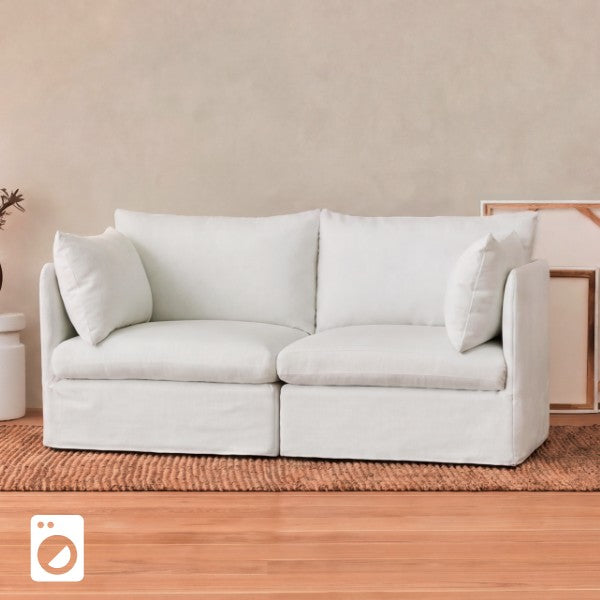
Anabei’s Build Your Own allows you to choose from 16 performance fabrics that are machine washable, stain and liquid resistant. You can also pick between two different cushion options based on your comfort needs.
How Modular Sofas Adapt Over Time
Modular construction provides long-term value through adaptability. A build-your-own sectional couch evolves with changing household needs rather than becoming outdated.
Life changes include moving homes, where you reconfigure to fit new room dimensions, growing families, where you add modules as seating needs increase, downsizing, where you remove sections when moving to smaller spaces, style updates, where you replace fabric covers without changing frames, and wear patterns, where you swap heavily used modules to distribute wear.
The sofa grows with the family instead of against it.
Modules can shift from L-shaped to straight layouts when relocating from a square room to a rectangular one. This flexibility extends furniture lifespan significantly compared to fixed setups.
Individual modules can be replaced, instead of having to replace entire sofas which can be more costly. If one section gets damaged or wears out, order a single replacement piece rather than buying new furniture. This approach reduces waste and long-term ownership costs.