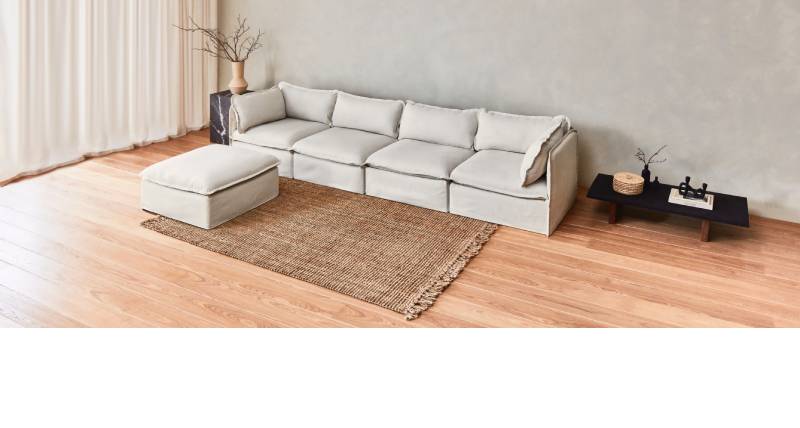


How to Style a Corner Sectional in Open-Concept Homes
Open-concept homes create big, flowing spaces that feel modern and connected. But all that openness can also make furniture placement tricky. A corner sectional offers a smart solution by providing plenty of seating while helping define different areas in the space.
This guide explains how to style a corner sectional in an open-concept home so the space looks good, feels comfortable, and actually works for daily living.

Modular Washable 5-Seater Corner Sectional in Willow | Memorix+ Seat | Contour Pillow
Why Corner Sectionals Work Well in Open-Concept Homes
Corner sectionals are particularly suited for open-concept layouts for several practical reasons.
They anchor large spaces effectively. Open-concept homes can feel empty or undefined without big furniture. A corner sectional provides that anchor point, creating a clear living area within the larger space.
They maximize seating in a compact footprint. The L-shape fits naturally into corners, giving you lots of seating without spreading furniture all over. This leaves floor space open for movement.
They create natural boundaries without walls. In open concepts where living, dining, and kitchen areas flow together, a corner sectional helps show where the living zone begins and ends.
They encourage conversation by putting people face-to-face. The corner design brings family members and guests together in a way that separate chairs or straight sofas don't.
Anabei's modular corner sectionals work especially well in open-concept spaces because they can be set up to fit different layouts. Their washable, modular designs also make them practical for busy households with kids, pets, and everyday use.
Choosing the Right Size and Configuration
Getting the size right is crucial in open-concept homes where the sectional needs to fit without taking over.
Measure the living zone, not the entire room. Figure out how much space you actually want for the seating area. A good rule is that the sectional should take up about two-thirds of this zone.
Think about sight lines from different areas. Stand in the kitchen and dining area. Can you still see across the space, or does the sectional block everything? Lower-back sectionals work better for keeping views open.
Consider traffic flow around and through the space. People need clear paths to move between the living area, kitchen, and other zones. Leave at least 30 to 36 inches for main walkways.
Pick the right setup based on your layout. Some corner sectionals have longer sides than others. Match the setup to your room shape. Square living zones work with balanced sides, while rectangular spaces might need one longer side.
Standard corner sectionals usually measure 90 to 120 inches on one side and 70 to 90 inches on the other. For most open-concept living areas, staying within these ranges works well.
Defining Zones with a Corner Sectional
One of the main jobs of a corner sectional in open concepts is defining different zones.
Position the back toward another zone to create a natural divider. Placing the sectional with its back facing the dining area or kitchen creates separation without blocking views completely.
Use the sectional as a starting point for the living zone. Everything else in that area relates to the sectional. The rug, coffee table, and side tables all work together to define this space.
Keep zone edges soft rather than hard. The sectional creates a boundary, but you don't want it to feel like a wall. Leave some visual connection between zones so the space still flows.

Photo by Grace Coats - Modular Washable 7-Seater Corner Sectional in Sakura | Memorix+ Seat | Contour Pillow
Best Placement Ideas for Open-Concept Layouts
Where you put a corner sectional really changes how the whole space works.
Floating in the space works well in large open concepts. Pull the sectional away from the walls, putting it to face a focal point like a fireplace or TV. This creates a cozy conversation area in the middle of the larger space.
Against the back wall with the corner tucked in is the most common placement. This saves floor space while still providing good seating. It works especially well when the TV or fireplace is on the opposite wall.
Creating an L around a fireplace positions the sectional to face the main focal point. The corner sits near the fireplace, with both sides angled toward it. (This setup works great for homes where the fireplace is the room's center.)
Dividing the two main zones places the section between the living and dining areas. The back faces the dining table, creating a natural divider while keeping the space open.
Anabei's modular design makes placement flexible since you can adjust or move pieces whenever you would like.
Styling Tips for Balance and Flow
Styling a corner sectional in an open concept requires thinking about the whole space, not just the living area.
Create visual balance across all zones. If your corner sectional is big, balance it with a similarly sized dining table and chairs. This prevents one area from feeling too heavy or too light.
Repeat materials or colors across zones to create flow. If the sectional has gray fabric, echo that gray in dining chairs or kitchen bar stools. This repetition connects different areas visually.
Vary heights to keep things interesting. A tall bookshelf or floor lamp near the sectional balances with pendant lights over the dining table.
Use a consistent style throughout the open area. Modern sectionals pair with modern dining furniture. Traditional pieces work with traditional styles. Mixing styles in open concepts can feel messy.
Add texture through throw pillows, blankets, and rugs. In big open spaces, texture adds warmth and keeps things from feeling too plain or empty.
Pairing Your Corner Sectional with Rugs, Tables & Decor
The right supporting pieces make a corner sectional look intentional in an open-concept space.
Choose a rug that fits the entire seating area. The rug should be big enough that all sectional legs sit on it, or at least the front legs. This anchors the furniture and defines the living zone clearly.
Pick a coffee table that matches the sectional's scale. The table should be about two-thirds the length of the sectional's longer side. In open concepts, glass or clear tables keep sight lines better than solid wood ones.
Balance the sectional with side tables at each end. They provide places for lamps, drinks, and decor, and tie the seating area together.
Layer with throw pillows, but don't go crazy. Three to five pillows in different sizes add comfort and style without overwhelming the sectional.
Addae throws a blanket draped casually over one side. This adds texture and coziness without messing up the clean lines important in open concepts.

Photo by Danielle Stewart- Modular Washable 4-Seater Corner Sectional in Oat | Memorix+ Seat | Contour Pillow
Lighting Tips to Enhance the Sectional Area
Good lighting makes a huge difference in how a corner sectional looks and functions.
Layer different light types in the living zone. Use a combination of overhead lighting and table and floor lamps. This adds depth and allows you to vary the lighting for different activities.
Add a floor lamp beside the shorter end of the sectional. It provides reading light and occupies vertical space without blocking views.
Use table lamps on side tables for warm lighting. These create a warm, inviting glow in the seating area during evenings.
Color Palettes That Complement Open-Concept Spaces
Color choices for your corner sectional affect the entire open-concept area.
Neutral sectionals in gray, beige, or cream work in most open concepts. These colors don't fight with other zones and make the space feel put together.
Match or complement kitchen colors if you have white kitchen cabinets; a gray or beige sectional works nicely. If cabinets are dark, lighter sectionals create good contrast.
Choose sectionals in colors that work with both indoor and outdoor spaces if areas connect. Anabei's sectionals come in neutral colors that transition well between spaces.
Add color through accessories rather than the sectional itself. Neutral sectionals let you change pillow colors and throws with the seasons without everything clashing.

Photo by Shae Anderson - Modular Washable 5-Seater Corner Sectional + Ottoman in Mist | Memorix+ Seat | Contour Pillow
Common Mistakes to Avoid When Styling a Corner Sectional
Choosing too big overwhelms the space and blocks the flow between zones. The sectional should fit the living zone, not dominate the entire room.
Blocking key pathways frustrates everyone. Make sure the sectional placement allows easy movement between the kitchen, dining, and living areas.
Forgetting about views from other zones. The back of a sectional becomes part of the dining or kitchen view, so it needs to look good from behind, too.
Ignoring scale in nearby zones creates an imbalance. A massive sectional next to tiny dining furniture looks weird and unplanned.
Picking clashing styles between zones breaks the flow that makes open concepts work. Keep style consistent across the entire space.
FAQs
1. Where should I place a corner sectional in an open-concept home?
A corner sectional is a great way to create a living area but still allow the space to breathe . Typically , you might float it in the middle of the room facing a TV or a fireplace , or against the back wall with the corner tucked in . It can also be used to separate living and dining areas back toward the dining area .
2. How do I separate spaces using a corner sectional?
Separate spaces by putting the corner sectional with its back facing another zone, like the dining area. This creates a natural divider without blocking views completely. Add a console table behind the sectional to finish the look from the other side. Use a large rug under the sectional to define the living zone floor space. Keep the separation soft rather than hard so the space still feels connected and open.
3. What size corner sectional works best for open layouts?
For most open layouts, corner sectionals measuring 90 to 120 inches on the longer side and 70 to 90 inches on the shorter side work well. The key is matching the sectional to your living zone size, not the entire room. Measure the space you want for seating and choose a sectional that takes up about two-thirds of that area. Leave enough room for walkways and other furniture. Think about lower-back designs to keep sight lines open.
4. How do I style rugs and coffee tables with a corner sectional?
Choose a rug large enough that all legs of the corner sectional sit on it, or at least the front legs. This anchors the seating area and defines the living zone. For the coffee table, pick one that's about two-thirds the length of the sectional's longer side. Put it 14 to 18 inches from the sectional for comfortable reach. In open concepts, glass or clear tables work well because they keep sight lines across the space. Add side tables at both ends of the sectional for balance and function.