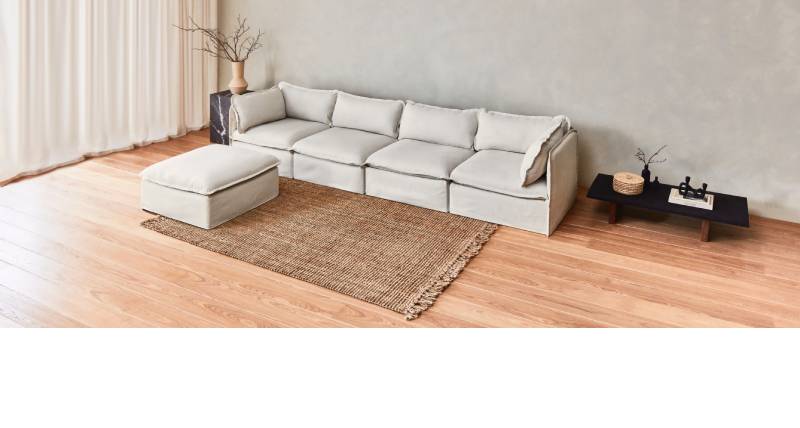


The Machine Washable Sofa
A sofa designed for real life—every layer is fully machine washable.


Free Returns
Risk-free furniture shopping—get every penny back if you’re not in love.
Popular Categories
FAQ
What is the difference between open-end and chaise?
An open-end sectional has regular depth seating without an armrest on one side. A chaise sectional extends one seat much deeper for full leg stretching. Open-ends let people sit normally or enter from the side easily. Chaise creates a lounging spot where someone can lie back fully. Open-ends work better for flexible seating, while chaises focus on relaxation and lounging comfort.
Can the open-end be changed later?
This depends on the collection. Anabei open-end sectionals are fully modular, so you can rearrange the layout whenever you like. If you decide to move the open-end to the opposite side, it can be easily repositioned — you’re never locked into a single configuration. That flexibility makes it easy to adapt your sofa as your space or needs change over time.
Are open-end sectionals suitable for corner rooms?
Yes, open-end sectionals work very well in corner rooms. Place the corner piece in the actual room corner with sections extending along two walls. Position the open end facing into the room rather than toward a wall. This creates welcoming seating that doesn't block the space. The open side makes the corner feel less closed off and easier to access. Corner rooms actually benefit from open-end designs more than fully armed sectionals.
Are covers removable and washable?
Cover removability varies by sofa model. Some feature zippered covers that can be taken off for cleaning, while others have upholstery that is permanently attached. Anabei sofas are designed with fully removable slipcovers made from high-performance fabrics that resist liquids and stains. Every cover is machine washable, making it simple to keep your sofa looking fresh over time.
Can I customize the fabric of an Open-End sectional?
Yes, definitely! With 16 performance fabrics to choose from, you can select the option that best fits your lifestyle. Every fabric is machine-washable, liquid-resistant, and stain-resistant. If you have pets, be sure to explore our pet-friendly, snag-resistant options.
An open-end sectional sofa offers flexible seating without a fixed arm on one side. Some configurations have a single armless end, while others are designed with armless ends on both sides for an even more open, adaptable layout. This design lets people sit or enter from the armless end freely. These sectionals work well in spaces where traditional closed designs feel too boxy or don't fit the room flow.
What Is an Open-End Sectional Sofa
An open-end sectional sofa features seating sections where one or both ends lack an armrest. Instead of arms on both sides like regular sofas, these pieces leave one or both sides completely open. This creates a smooth, uninterrupted seating surface.
The open side can measure 30 to 36 inches wide, the same as a standard seat module. Without the arm taking up space, this end can feel more spacious and welcoming. People can slide in from the side easily or stretch out without bumping into armrests.
Most open-end sofas come in L-shaped configurations. One section runs straight while another turns at a corner, with the open-end usually placed on the longer side. Some designs put the open-end on the shorter return section instead. And other designs have both ends of the sofa open.
Open-end sofas offer:
- Armless sitting area on one or both sides for easy access
- Corner piece connecting two seating runs
- Flexible entry and exit points.
- More room to stretch out
How Open-End Sectionals Affect Seating and Layout
The open-end changes how the sectional fits into rooms and how people use it. Unlike closed sectionals with arms boxing in both ends, the open design creates flow.
Room traffic moves more smoothly around an open-end couch. The armless side doesn't block pathways or create barriers. This matters in smaller rooms where every inch counts. People can walk past the sofa or sit down without navigating around bulky arms.
The open-end also makes rooms feel less crowded visually. Closed arms create solid stopping points that can make furniture look heavy. Open ends let the eye travel across the space more freely.
Seating flexibility increases with open-ends, too. Someone can perch on the armless end temporarily without committing to a full sit-down. Kids especially like the freedom of hopping on and off from the open side. The design accommodates casual, relaxed sitting styles.
Placement options expand because the open end doesn't need wall clearance like armed ends do. Position the armless side toward walkways, doorways, or other furniture without worrying about bumping into arms. This works great in open floor plans where the sofa floats in the middle of the room.
Left Open End vs Right Open End Sectionals
Open-end sectionals are commonly available in left-facing and right-facing versions. This describes which side has the open-end when sitting on the sofa facing forward.
A left open-end sectional sofa has the armless side on the left when seated. The arm sits on the right side. When planning room layout, imagine sitting on the sofa and looking toward the TV or main focal point. The open-end appears on your left-hand side.
A right open-end sectional sofa places the armless side on the right when seated. The arm sits on the left. Using the same method, sit mentally on the sofa facing forward, and the open-end appears on your right-hand side.
Choosing between left and right depends on the room layout. Consider these factors:
- Which direction creates better traffic flow
- Where doors and walkways sit in relation to the sofa
- Which side faces the room's main activity area
- How do other furniture pieces need to be arranged around it
Most rooms work better with one direction over the other. Walk through the space mentally and imagine approaching the sofa from different angles. The right choice usually becomes clear pretty quickly.
Some collections, like Anabei, also offer configurations with open ends on both sides. This eliminates the need to commit to a left- or right-facing layout and makes it easier to adapt the sofa as your space or needs change.
Room Layouts Suitable for Open-End Sofas
Open-end sectional sofas fit several room types and layouts particularly well.
Living rooms with doorways near one end of the sofa benefit most. Position the open end toward the entry point so people enter the seating area smoothly. The armless side welcomes people in rather than blocking them with a bulky arm.
Open concept spaces work great with open-ended couches. These areas often have furniture floating away from the walls. The open-end faces into the room, creating an inviting conversation area. The missing arm keeps sight lines clear across the space.
Corner placements suit open-end sectionals naturally. Put the corner piece in the actual room corner with the open-end extending into the room. This maximizes seating while keeping the layout from feeling too enclosed.
Smaller rooms measuring 200 to 300 square feet handle open-end designs better than fully armed sectionals. The reduced visual bulk helps the room breathe. Leave 30 inches of space around the sofa for comfortable movement.
Rooms with multiple entry points or through traffic appreciate the flexibility. Position the open-end where people naturally walk so the sofa doesn't create obstacles. The design adapts to how people actually use the space.
Fabric Options and Seating Comfort
Material choices affect how an open-end sofa looks and performs over time. Different fabrics suit different households and lifestyles.
- Performance fabrics - Resist stains and spills, making them perfect for busy families. These materials clean up easily when accidents happen. Kids, pets, and regular use all get handled well by performance textiles.
- Woven fabrics - Feature flat woven micro-denier construction with a cross-dye technique that creates depth and visual interest. These durable materials handle everyday wear while maintaining their fresh appearance and comfortable feel.
- Velvet fabrics - Add softness and rich texture. These materials feel luxurious and create visual depth through their surface texture. The tight-weave velvet offers both comfort and practical durability for daily use.
- 100% Polyester materials- Provide long-lasting performance that resists fading and wear. These materials stay soft and comfortable through regular use while maintaining their appearance over time.
Comfort is just as important and seat firmness plays a major role in long-term satisfaction. Medium-firm cushions tend to suit most people, offering the right balance of softness and support without feeling too stiff. If you have the chance, sit on the sofa for a few minutes to see how it feels over time, not just at first touch. It’s also worth paying attention to what’s inside the cushion - high-quality options use high-density foam cores designed to hold their shape and maintain consistent comfort for years.
Anabei offers 16 performance fabric options across its collection of modular sofas, sectionals, armchairs, and loveseats. All fabrics are machine washable, stain and liquid resistant, designed to hold up in the busiest of households.