

How to Choose Eco-Friendly Furniture for Your Home
Trying to shop more sustainably can feel confusing fast. One minute you’re excited to make better choices for the planet, and the next you’re staring at furniture sites wondering what’s actually eco friendly and what’s just clever marketing. “Green” gets thrown around a lot, but it doesn’t always mean much. The good news is, once you know what really matters, finding genuinely eco-conscious furniture becomes a lot simpler.
Here's the reality nobody tells people when they start caring about this stuff and trying to shop responsibly: most conventional furniture absolutely destroys the environment through cutting down forests, using toxic chemicals, massive pollution from shipping stuff halfway around the world, and ending up in landfills after just a few years when it inevitably falls apart. Eco-friendly furniture takes a different approach. It focuses on smarter materials, responsible manufacturing, and designs meant to last. Anabei leans into this mindset by using durable steel frames instead of cutting down trees, incorporating recycled materials, and prioritizing carbon-conscious shipping to reduce unnecessary emissions. The result is furniture that feels good in your space and better for the planet, built to stay with you for the long run.

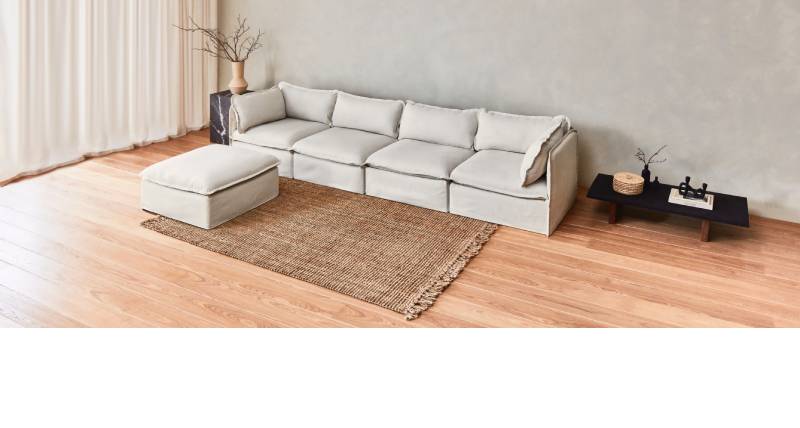
Photo by Mia Syn - Modular Washable 8-Seater U-Sectional + Ottoman in Eggshell | Memorix+ Seat | Contour Pillow
What Actually Makes Furniture Eco-Friendly?

The term eco friendly gets used so loosely these days that it’s easy to tune it out. Real eco-conscious furniture looks at the full picture, from where materials come from to how long a piece lasts and what happens at the end of its life. It’s not just about adding a “green” material and calling it done. Sustainability is about thoughtful choices at every step.
Sustainable sourcing means materials come from stuff that grows back or recycled content instead of raw materials ripped from ancient forests or petroleum dug up from underground reserves. FSC certification guarantees that wood came from forests where they actually plant new trees instead of just destroying everything and moving on to wreck the next forest. Anabei takes a totally different route by using steel frames that eliminate wood completely from the picture, dodging all those deforestation worries while creating furniture that outlasts traditional wood construction by years and years.
How furniture is made matters just as much as what it's made from when trying to understand if something truly is eco-friendly. Water-based glues reduce harmful chemical fumes compared to conventional adhesives that release toxins into air for literal years after buying furniture.
Where goods are manufactured also impacts the environment, as it can impact shipping distances. The way these goods are also shipped, which for furniture, often require LTL freight, can have a negative impact on the environment. Anabei has redefined what it means to ship a sofa. All modules ship parcel delivery, in lightweight, easy-to-manage boxes. Carbon neutral shipments that are lighter on the planet.
How Do Recycled Materials Actually Work in Furniture?
Using recycled stuff in furniture tackles multiple problems at once, which makes it a massive win for everyone involved. Recycled plastic fabrics keep bottles and other junk out of oceans and overflowing landfills while needing way less energy to make than brand-new synthetic materials from scratch. Anabei uses upcycled cosmetic-down made from recycled plastic bottles, combining comfort with sustainability. Designed with recycled materials and nontoxic practices, these pieces are both stylish and responsible—so your home looks great while keeping people and the planet in mind.
The performance side of recycled materials has gotten dramatically better in recent years, too, eliminating the belief that sustainability meant sacrificing quality or getting furniture that falls apart quickly. Recycled polyester fabrics used in eco-friendly sectional sofa upholstery fight off stains, wear, and fading just as well as brand-new materials while massively reducing environmental damage.
Circular economy thinking is how the smartest sustainable furniture brands do things today. Instead of the old take-make-throw-away cycle that fills landfills, circular design keeps materials in use as long as possible—through durable construction, easy-to-fix designs, and eventual recycling when pieces reach the end of their life.
Anabei brings this concept to life by extending the life of your sofa with washable slipcovers These covers resist stains and liquids, keeping your furniture looking fresh even with daily use. The modular design also makes it easy to replace individual components - whether it’s a foam insert or a section of the frame - without having to swap out the entire couch. These thoughtful details are exactly what make Anabei products last longer and truly stand up to real life.
Anabei doesn’t just think about how sofas perform in your living room today—they also consider the impact decades down the line. Using materials that are recyclable at the end of their life cycle means less waste and fewer landfills. For example, the foam and steel frame in these sectionals can be fully recycled, giving them a second life instead of becoming trash. It's a thoughtful design that lasts in your home and respects the planet long after daily life has moved on.
Must Checkout: Discover Performance Fabric Sofas Built for Small Spaces and Real Life
Comfort
What Certifications Should You Actually Trust?

Certifications are the best way to cut through all the greenwashing noise. Instead of just trusting whatever a brand claims online, independent verification shows what’s actually safe. Oeko-Tex tests fabrics for over 100 harmful substances, so everything that touches your skin daily meets strict safety and environmental standards. Anabei’s Oeko-Tex certified fabrics give real peace of mind—no marketing fluff, just fabrics you can trust.
CertiPUR-US certification for foam means cushions are made without flame retardants, heavy metals, formaldehyde, ozone destroyers, and other nasty chemicals floating around, while keeping toxic fume emissions really low.
GREENGUARD Gold certification tests entire furniture pieces for emissions messing with indoor air quality people breathe constantly, screening thousands of chemicals and toxic fumes that could make home air disgusting and unhealthy. This matters especially for families with young kids crawling around, people dealing with asthma or allergies, or anyone spending lots of time at home who cares about what they're breathing into their lungs all day long every single day.
Does Furniture Lasting Forever Count as Being Green?
Here's something most people completely miss when thinking about eco-friendly furniture and shopping sustainably: the absolute greenest choice is furniture that lasts so long that it doesn’t need to be replaced. A cheaper couch made from recycled materials but falls apart in three years still creates more waste and pollution than a quality piece lasting twenty or thirty years, even if that longer-lasting furniture is composed of traditional materials.
Anabei builds furniture with sustainability in mind through steel frames that won't ever warp or break as wood does, high-quality cushions keeping their shape through years of kids jumping and daily sitting, and performance fabrics fighting off wear and stains without falling apart. This longevity approach to sustainability makes way more environmental sense than constantly buying so-called "eco-friendly" replacements every few years
Modular design adds another green layer by letting furniture change and adapt as actual life changes, rather than becoming useless and obsolete. An eco-friendly sectional sofa that rearranges from a small apartment setup to a huge sprawling family room arrangement means people keep using the exact same furniture through multiple life stages. No need to toss it and buy new pieces every time your family grows or moves. It's built to last, built to evolve, and built to truly be green.
You May Also Read: What Makes a Sofa High Quality? Expert Tips Before You Buy
FAQs
1. Is secondhand furniture more eco friendly than buying new sustainable pieces?
It totally depends on what's being compared! Vintage furniture keeps previous pieces out of landfills, which helps, but might contain flame retardants and other chemicals from way older, outdated standards. New sustainable furniture made responsibly can actually be much cleaner and last dramatically longer than old pieces,
2. Does eco-friendly furniture cost way more money than regular furniture?
It depends! Quality eco-friendly furniture often costs more upfront when buying it, but lasts dramatically longer, so it's actually cheaper over time when calculating everything. Plus, with modular washable slipcover chairs, no more constantly replacing and wasting money every year.
3. Can performance fabrics really be sustainable and eco-friendly at the same time?
Absolutely yes! Some Modern performance fabrics use recycled content pulled from waste and get stain resistance through smart fiber engineering rather than spraying on toxic chemical treatments. Anabei's fabrics prove having both real sustainability and serious everyday functionality in the exact same package without compromising either side is totally possible.
4. What's the single most important thing when choosing eco-friendly furniture?
Purchase quality pieces built to last for years, instead of cheaper pieces that would end up in landfills within a couple of years. How long furniture lasts matters way more than any single material choice when calculating true environmental impact over decades of time.
Why Choose Anabei Furniture?
Anabei makes eco-friendly furniture that actually works for real homes—without compromising style or comfort. Their steel frames mean no forests are cut down, and they last far longer than traditional wood. Recycled materials keep tons of waste out of landfills, while Oeko-Tex certified fabrics guarantee everything touching your skin meets strict environmental standards.
With washable covers extending furniture life by stopping permanent stains and damage before they ruin everything, modular configurations changing and adapting as needs shift over the years, and construction built tough to last literal decades rather than breaking in just a few years, Anabei delivers real sustainability. The planet deserves better choices, and Anabei makes those choices accessible for everyday people furnishing homes they truly love living in.

Modular Washable 3-Seater Sectional in Caviar | Memorix+ Seat | Contour Pillow