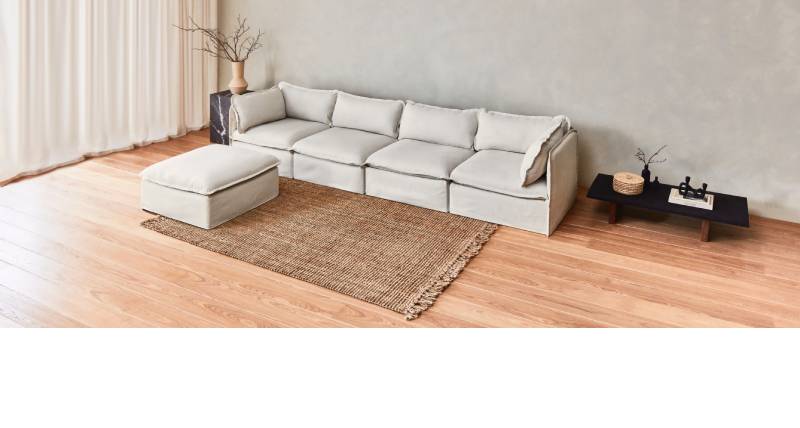


What Makes a Sofa High Quality? Expert Tips Before You Buy
People buy gorgeous sofas that look perfect online, the price seems reasonable, and the reviews are okay. Six months in, and the cushions go completely flat, frames start making weird noises, and the fabric looks like a cat attacked it (total waste of $900). That's when start to distinguish a high-quality sofa from one that just photographs well.
Here's how to avoid making these expensive mistakes.
What Should You Actually Look for in a Sofa Frame?
The frame of furniture matters more than you'd imagine. Beautiful fabric and plush cushions won’t save a sofa if the structure underneath can’t hold up over time.
Start with Kiln-dried hardwood frames, like oak, maple, and birch. This stuff lasts decades, stays strong through years of people sitting, kids jumping, life happening (worth the extra money every single time). Engineered wood works okay for some parts, but solid hardwood always beats it.
That said, not all high-quality sofa frames are made from wood. Many modern, performance-driven designs use metal frames as a strong alternative. Powder-coated steel, stainless steel, and even lightweight aluminum are increasingly popular in modular and contemporary sofas. These materials don’t warp, crack, or attract pests, and they handle moisture far better than wood. Steel frames in particular offer exceptional strength and consistency, making them ideal for modular systems that are meant to be reconfigured, moved, and expanded over time.
Particleboard is one material worth avoiding entirely, and it’s most often found in lower-price furniture. Made from compressed sawdust held together with glue, it lacks the structural integrity needed for everyday use and tends to break down quickly—especially in high-stress seating areas where durability matters most.
Corner blocks and dowels make everything way stronger. Look for corner blocks screwed and glued at every joint. Dowels add even more stability. Some cheaper brands just staple pieces together (they fall apart in like a year, happens constantly).
Anabei uses a patent-pending powder-coated steel frame across their designs. The steel construction is engineered to be exceptionally durable—no creaking, no splitting, and no weakening over time. It’s built to handle real life, from everyday lounging to kids climbing and constant use.
High-stress areas are reinforced for added strength, especially in larger sectionals designed for family living. The result is a frame that stays solid year after year, delivering long-term performance without the structural issues common in traditional wood construction.
Frame checklist to keep in mind:
-
Kiln-dried hardwood (oak, maple, birch) or Metal frames
-
Corner blocks everywhere
-
Doweled joints
-
Zero particleboard
-
Feels heavy and solid
-
Extra support at stress points
How Can You Tell If Sofa Cushions Will Actually Hold Up Overtime?

Cushions make or break everything. High-quality sofa cushions stay supportive for years instead of becoming very flat (old couch cushions become basically floor mats by month seven, not exaggerating). High-density foam matters most. Density gets measured in pounds per cubic foot. Good cushions use a minimum density of 1.8 to 2.5. Lower than that compresses too fast and stays squished. Higher density costs more but keeps its shape forever.
Wrapped foam cushions work best. Foam core wrapped in batting or down. Feels softer on top while staying supportive underneath. Just foam alone feels too hard. Just down or fiberfill goes flat instantly. Wrapped gives both.
Eight-way hand-tied springs are like the gold standard. Springs tied together in eight directions, supportive and durable (super expensive but worth it). Sinuous springs cost less and work okay for backs. Webbing is typically less durable and doesn’t provide the same long-term support.
Reversible cushions extend lifespan. Cushions that can be flipped and rotated wear more evenly, helping them maintain their shape much longer than one-sided designs that take all the pressure in the same spot day after day.
What to Look for in Cushion Quality:
-
High-density foam (1.8+ density)
-
Wrapped construction
-
Eight-way hand-tied springs for seats
-
Cushions that flip/rotate
-
Bounces back when pressed
-
Thick enough for weight
Also Checkout: How to Choose Non-Toxic Couches for Your Home
What Fabrics Actually Hold Up?

Modular Washable 3-Seater in Milk | Memorix+ Seat | Contour Pillow
Fabric choice changes everything about how high-quality sofas look and survive daily life. Gorgeous linen sofas look completely destroyed after one dinner party (wine spills are brutal on linen, brutal lesson learned).
These are designed to resist stains, liquids, fading, and daily wear—without feeling stiff. High performance fabrics are soft, cozy, and built to survive spills, pets, and kids, so you don’t have to tiptoe around your own furniture.
Tight weave lasts longer than loose weave. Hold fabric up to the light. If tons of light come through, that's loose weave, and it pills and tears easily. Tight weave blocks most light, way more durable.
The rub test shows real durability. Durable fabrics bounce back; cheaper ones start pilling or look worn immediately. Cheap stuff starts pilling or changes texture immediately. Super simple test that tells everything.
Natural fabrics like cotton and linen look beautiful, but stain more easily and fade faster (painful truth). Synthetics like polyester are more durable and stain-resistant. Blends try to give a botanical, natural feel with better toughness.
Anabei uses performance fabrics that actually work for real families.Their performance fabrics are soft, stylish, and durable enough for kids, pets, and messy moments. Also, it's completely machine washable, keeping your sofas looking good year after year.
Fabric Checklist:
-
Performance treatment for stains
-
Tight weave
-
Passes the rub test
-
Color that hides wear
-
Feels nice against skin
-
Works for how people live
-
Machine washable slipcovers
Does Weight and Feel Matter?
Absolutely. A high-quality sectional just feels right. Pick up a cushion—it’s dense, substantial, and built to last. Try moving the sofa: it takes effort, because weight usually means solid materials all the way through. Physics doesn’t lie.
Sit down and bounce a little. A well-made sofa absorbs movement, stays quiet, and feels solid. Low-quality frames creak, wobble, and twist under normal use. Nothing should flex unnaturally when you’re just sitting, lounging, or curling up for a movie.
Sectional connectors matter too. On high-quality modular sofas, pieces click together firmly and stay put. On cheaper versions, sections can slide apart while you’re sitting—super frustrating and surprisingly common.
Weight Tests to Try:
-
Cushions feel heavy
-
Whole sofa is hard to move
-
Zero creaking sounds
-
Frame completely solid
-
Sectional pieces lock tight
-
No flexing or twisting
What Little Details Should Anyone Check?

Modular Washable 3-Seater Sectional in Coco | Memorix+ Seat | Contour Pillow
Details separate high quality sectional sofas from cheap ones pretending to be nice. Check seams; they should be perfectly straight and tight. Loose threads or crooked stitching mean rushed work (usually means corners cut elsewhere, too).
Piping and welting should lie completely flat and straight. Puckered or twisted piping shows bad work. These seem like tiny things, but they show overall quality.
Look underneath the sofas. Quality work continues where nobody sees it. Fabric wrapped nicely underneath, neat stapling, proper supports. Cheap sofas leave undersides raw and messy because they know most people won't look there (always look there).
Legs matter more than anyone thinks. Solid wood legs attached with bolts and screws last forever. Plastic legs or ones just screwed in from the bottom break super easily.
Anabei pays attention to details nobody else bothers with. Their modules have proper piping and reinforced seams. Even the duvets are finished nicely because quality should go all the way through (not just the pretty parts people see first).
Details Worth Checking:
-
Straight even seams
-
Flat piping and welting
-
Clean finished underside
-
Solid wood legs attached right
-
Thread colors match
-
Reinforced where stress happens
How Long Should Sofas Actually Last?

Modular Washable 2-Seater in Chestnut | Memorix+ Seat | Contour Pillow
A high quality sofa should last 15 to 25 years minimum with decent care. Frames might last even longer; cushions and fabric probably get replaced before frames wear out (if built right in the first place).
Budget sofas last maybe 3 to 5 years before falling apart or getting super uncomfortable. Mid-range might make it 7 to 10 years. High quality sectional sofas pay for themselves over time because you’re not constantly buying new furniture (plus way less hassle and stress).
Warranty tells what companies actually expect. Quality brands give 10+ year frame warranties because they know their products are meant to last.
Think cost per year instead of just upfront price. $3000 sofa lasting 20 years costs $150 yearly. $800 sofa lasting 4 years costs $200 yearly plus all the hassle of shopping and replacing again (math makes quality worth it every time).
What to Expect From Long-Lasting Furniture:
-
Good construction throughout
-
Quality materials used
-
Solid warranty
-
Proper maintenance
-
Realistic about wear
-
Calculate yearly cost
What Questions Should You Actually Ask Before Buying?
Ask exactly what the frame is made of and how it’s built. If the salesperson gets vague or dodges, that’s a massive red flag. Quality brands know this stuff inside and out and actually want to tell you.
Ask about the foam composition. High-density foam” doesn’t mean much without numbers. Seat cushions should hit 1.8 pounds per cubic foot at minimum. Anything lower? Expect saggy, flat cushions fast.
What's the return policy look like? Quality places offer reasonable returns because they're confident in what they sell. Short return windows or big restocking fees suggest they expect unhappy customers.
Where's it made and how long till delivery? Nothing wrong with overseas making if quality is controlled right. But super-long wait times and vague locations can mean problems.
Can anyone actually see the construction? Ask to look underneath, check frames, and see how cushions are made. Stores that hide construction stuff usually have bad reasons (never good ones).
When shopping for high-quality sectional sofas, ask about modular options . Ask if pieces connect and reconfigure. Being able to add or rearrange sections later adds real-life value. Furniture should bend to your life, not the other way around.
FAQs
1. How much money should anyone actually spend on a high quality sofa?
High quality sofas start around $2000 for a regular three-seater. Sectionals run $3000 to $6000, depending on size and features. Going cheaper usually means giving up lasting quality and real comfort (been there, regretted it).
2. What's the absolute best frame material?
Kiln-dried hardwood like oak, maple, or birch has always been a winner, staying stable, handling stress perfectly, and lasting for decades. For those looking for next-level durability, industrial-grade steel frames take it even further—powder-coated, virtually indestructible, and completely resistant to creaking or splitting, built to survive real life, pets, kids, and countless moves. Both options outlast cheap alternatives and are worth the investment.
3. How can anyone tell if cushions are actually good quality?
Check foam density numbers (should be 1.8+ for seats), feel if cushions are heavy and solid, press down hard, and see if they bounce back fast. Good cushions keep their shape and feel supportive, not mushy or rock hard.
4. Do performance fabrics really work or just marketing?
They actually work and technology has improved. Quality performance fabrics resist stains and wear while feeling comfortable. Not all are equal though.Get a swatch kit to test, feel, and see it all before making a purchase.
Making the Right Choice
Getting a high-quality sofa means looking past pretty photos and checking actual construction. Frame material, cushion density, fabric toughness, weight, and details. These things decide if sofas last 20 years or die in 2.
Take time researching, ask specific questions, and test in person when possible. Read reviews that talk about long-term use, not just day one impressions. Think of the yearly cost, not just what you would pay today.
Quality can cost more up front but saves money and hassle in the long run.
Why Choose Anabei?
Anabei builds furniture meant to last generations, not just photograph well. From tough armchairs and ottomans to the full sectional line, including corner sectionals and U sectionals, everything focuses on real construction and materials.
Anabei’s sofas use high-quality construction principles that make their furniture last. Frames are built to handle daily life without creaking or warping. Slipcovers are designed for durability and easy cleaning, and even smaller details like cushions and fabrics. Investing in a sofa this durable means skipping the constant cycle of replacing cheap furniture every few years and actually enjoying your living room instead of stressing over it

Photo by Shelby Masson - Modular Washable 7-Seater Corner Sectional in Eggshell | Memorix+ Seat | Contour Pillow