

Which Type of Sofa Is Better?
Choosing the right sofa can seem simple at first, until you start looking at all the options. Standard sofas, sectionals, loveseats, open-end pieces, and chaise layouts all have their place, but each works better in some spaces than others.
The more relevant question is not which type is best in general, but which is best suited to the specific way a space is used, who lives in it, and how long the piece is expected to perform.
What Are the Different Types of Sofas Available?
The most common indoor sofa types include the standard sofa, loveseat, sectional, corner sectional, U-sectional, and open-end designs with a chaise. Each one is made to fit different room layouts and everyday living needs.
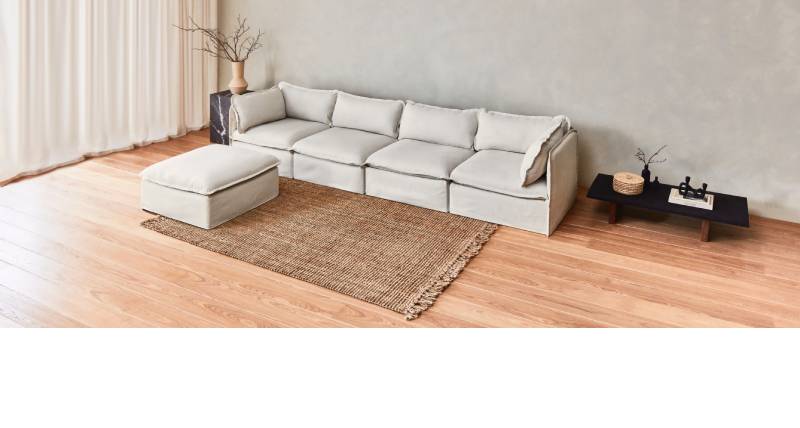
A standard sofa typically seats two to four people and works in most room sizes. A loveseat is smaller, designed for one to two people, and suits compact rooms or acts as a companion piece to a larger sofa. A sectional sofa wraps around a corner and maximises seating in a single footprint. A corner sectional specifically uses the corner of a room to anchor the layout, while a U-sectional extends seating on both ends for maximum capacity. Open-end sofas have one or both sides without armrests and are often paired with a chaise ottoman. This creates a layout similar to a double chaise setup, where both ends offer space to stretch out and relax.

Photo by Lisa Song - Modular Washable 7-Seater Open-Ends U-Sectional + Ottoman in Mist | Memorix+ Seat | Contour Pillow
What Factors Should You Consider When Choosing a Sofa?
Room size is the first filter. A large sectional in a small room can overwhelm the space and make it harder to move around comfortably. On the other hand, a small sofa in a large room can feel out of place and fail to properly anchor the layout.
A compact sofa in a large room will feel lost and fail to anchor the space. Beyond dimensions, the most important considerations are daily use, maintenance, and how often the household expects the layout to change.
Households with children and pets have different requirements than single occupants or couples. In these environments, durability, washability, and stain resistance are not optional features, but essential ones. For those who move frequently or enjoy reconfiguring their space, modular systems offer added flexibility without the need for tools or professional assembly.
Comfort is equally important. Some prefer a firmer, more supportive seat, while others gravitate toward a deeper, sink-in feel. Both are valid, but worth defining early, as these characteristics are not easily changed after purchase.
How Do Popular Sofa Types Compare to Each Other?
A standard sofa is the most versatile option for mid-size rooms. It fits naturally into most layouts, leaves walkable space, and suits both casual and more formal living rooms. The tradeoff is that it maxes out at three to four seats before it becomes unwieldy.
A sectional sofa offers considerably more seating in a single purchase and uses corners efficiently, which tends to improve traffic flow by consolidating furniture into one area of the room. Corner sectionals work particularly well in square rooms and open-plan layouts. U-sectionals suit larger rooms and households where multiple people need to be seated comfortably at the same time.
Open-end sofas with a chaise ottoman create a layout that functions like a double chaise lounge indoor arrangement, giving the sofa a lounging end without committing to a full sectional. This is a useful middle ground for rooms that are not quite large enough for a sectional but need more seating than a standard sofa provides.

Modular Washable 3-Seater in Willow | Memorix+ Seat | Contour Pillow
What Are the Pros and Cons of Each Sofa Type?
Standard sofas are versatile, fit most room layouts, and are relatively easy to move. Their limitation is straightforward: seating capacity is more modest, and they do not offer an extended lounging surface. Loveseats are even more space-efficient, making them well-suited to smaller rooms, but they naturally accommodate fewer people.
Sectionals maximize seating and make efficient use of floor space, though they can feel oversized in smaller rooms and are more difficult to reposition unless designed in a modular format. Open-end configurations offer a middle ground, combining flexible layout options with the relaxed functionality of a chaise without the commitment of a full corner sectional.
The less obvious consideration across all sofa types is long-term maintenance. Fixed upholstery that cannot be removed or cleaned beyond surface level tends to show wear more quickly, especially in high-use homes.
With Anabei’s modular design and high-performance, washable slipcovers, it becomes easier to both reconfigure the layout and maintain the fabric over time, supporting a longer lifespan than traditional fixed sofa designs. In practice, the difference often comes down less to sofa type and more to how thoughtfully it is constructed
How Can You Choose the Right Sofa for Your Home?
Start with the floor plan. Measure the room, then sketch out where the furniture will go, making sure the sofa won't block pathways before you decide on its dimensions or design. In rooms smaller than 200 square feet, a smaller sofa or a sectional with a streamlined look is usually a better choice than a bulky one.
Next, be honest about how the sofa will actually be used. A best sectional sofa for a family that spends most evenings piled together watching television is very different from the right choice for someone who entertains occasionally and wants the room to look clean and composed most of the time.
Anabei's modular collection covers sofas, loveseats, sectionals, corner sectionals, U-sectionals, and open-end configurations all the way up to 9 seaters, with each layout available in the same patent-pending machine-washable system. Both the fabric slipcovers and the Frame Duvet are fully removable and machine washable, the powder-coated steel frame carries no wood and is designed to last a lifetime, and comfort can be customised between the sink-in Deluxe+ Blend and the supportive Memorix+ memory foam option. Each module connects and can be rearranged easily, which means the sofa type is not permanently fixed at the point of purchase.

Modular Washable 5-Seater Corner Sectional + Ottoman in Chestnut | Deluxe+ Seat | Cloud Pillow
FAQs
1. What is the most comfortable type of sofa?
Comfort is personal, but the most comfortable sectional sofa setups tend to involve deep seats, generous back support, and cushions that hold their shape without requiring regular fluffing. Anabei offers two seat insert options: the Deluxe+ Blend for a softer, sink-in lounging feel, and the Memorix+ Blend for more structured, contoured memory foam support, allowing you to choose the comfort level that best suits your preference.
2. Which type of sofa is best for a small living room?
A small sectional sofa that fits against a corner or wall consolidates seating into one footprint and leaves more open floor space than two separate sofas. Compact open-end configurations work well too, particularly where a chaise adds lounging space without requiring a full corner sectional.
3. Can a sleeper sofa be used as an everyday couch?
A sleeper sofa can absolutely serve as an everyday sofa, provided the frame and cushions are built for daily use and not just occasional sleeping. The key consideration is cushion quality. Standard sleeper mechanisms often sacrifice comfort for functionality. A modular sofa with deeply cushioned seating and a washable setup handles daily use more durably than most traditional sleeper designs.