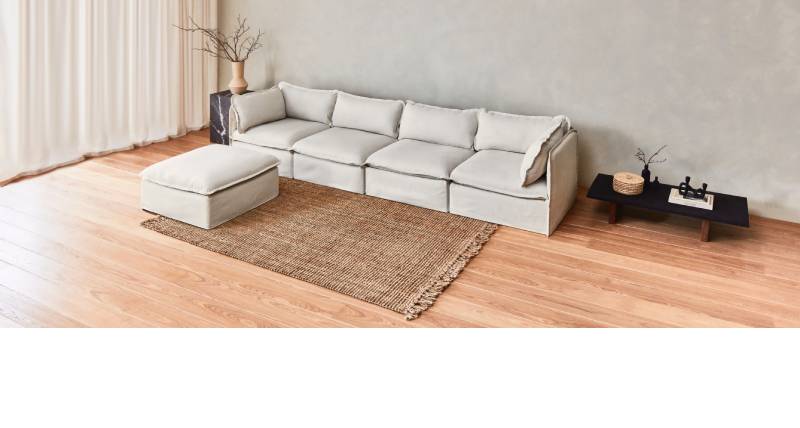


How to Style a 2-Seater Sofa in a Compact Living Room
A 2-seater sofa works perfectly in a compact living room when styled thoughtfully. It provides comfortable seating without taking over the floor. The key is arranging the space so it feels intentional and cohesive, not cramped.
This guide walks through how to style a 2-seater sofa in a compact living room so the space looks good, feels comfortable, and actually works for daily life.

Modular Washable 2-Seater in Coco | Memorix+ Seat | Contour Pillow
Why 2-Seater Sofas Are Ideal for Compact Living Rooms
2-seater sofas make a lot of sense in small living rooms for several practical reasons.
They provide real seating without dominating the room. A 2-seater gives two people a comfortable spot to sit together while leaving enough floor space to actually move around. Bigger sofas in small rooms often make everything feel stuffed and awkward.
They're easier to arrange in tight spaces. Moving and positioning a 2-seater is way simpler than wrestling with a huge sectional or oversized sofa. This matters a lot in small apartments where furniture sometimes needs to be shifted around.
They create visual balance better than oversized furniture. In a compact room, a properly sized 2-seater looks right. A large sofa in a small room can overpower the space and make everything look off-balance.
They leave room for other needs. Small living rooms often do double duty as workspaces, dining areas, or hobby spots. A 2-seater leaves space for a desk, small table, or other furniture that makes the room more functional.
Anabei offers modular washable 2-seaters that work especially well in compact spaces because they're designed with smart proportions and clean lines that don't overwhelm small rooms.
Choosing the Right Size and Proportions
Not all 2-seater sofas are the same size. Picking the right proportions for your specific room matters a lot.
Measure your space carefully before you even start shopping. Write down the room's length and width. Also measure where you think the sofa will go, accounting for doorways, windows, and radiators.
Consider depth as much as length. Some 2-seaters are super deep for lounging, while others have shallower seats. Deep sofas feel comfortable, but stick way out into the room. Shallower sofas save space but might not be as comfy for long Netflix sessions.
Think about arm style. Big, chunky arms eat up seat space and make the sofa look bulkier. Slim arms or armless designs give you more actual seating in a smaller footprint. (This can make a real difference in how the sofa actually fits the room.)
Check overall height. Low-profile sofas with shorter backs make rooms feel more open by keeping sightlines clear. Really tall backs can make a small room feel closed in.
Use the two-thirds rule as a general guide. Your sofa should be about two-thirds the length of the wall it's against. This creates a good proportion without making the sofa look too small or too big for the space.
Standard 2-seaters usually run between 50 and 70 inches wide. For most compact living rooms, staying between 55 and 65 inches works best.
Placement Tips for Small Spaces
Where you put your 2-seater sofa really changes how well the room works.
Against the longest wall is usually the best spot. This leaves maximum floor space for traffic flow and other furniture. It also creates a natural focal point for the room.
Floating away from the wall can actually work in some small spaces. If your room is narrow, pulling the sofa slightly away from the wall and putting a slim console table behind it can make the space feel less cramped. (This seems backwards, but it sometimes really works.)
Angling in a corner is an option for oddly shaped rooms. Placing a 2-seater at an angle can soften harsh corners and create a cozy seating nook. Just make sure it doesn't block major traffic paths.
Facing the room's focal point makes the most sense functionally. Whether that's a TV, fireplace, or big window, orient the sofa so people sitting on it can actually enjoy that feature.
Leave a walking space of at least 18 inches around the sofa if possible. Ideally, shoot for 24 to 30 inches. This lets people move around without feeling like they're squeezing through.
Consider traffic flow through the room. Don't put the sofa where it blocks the natural path people take when walking through the space. Keep main walkways clear.
Color and Fabric Choices to Open Up the Room
The color and fabric of your 2-seater sofa have a huge impact on how spacious the room feels.
Light colors reflect light and make rooms feel bigger and more open. Soft whites, creams, light grays, and pale blues all work well in compact spaces. They create an airy feeling that helps small rooms breathe.
Dark colors can work, but need more thought. A dark sofa against light walls creates contrast without necessarily making the room feel smaller. The key is maintaining enough color difference so things don't feel heavy or closed in.
Medium tones are the safe bet for most people. Colors like warm gray, beige, or soft taupe hide everyday wear and tear better than super light or super dark options while still keeping the room feeling open.
Patterns add interest without adding visual weight if chosen carefully. Small-scale patterns work better than large, bold ones in compact spaces. Subtle textures or tone-on-tone patterns add depth without overwhelming.
Smooth fabrics tend to look lighter than heavily textured ones. Linen, cotton blends, and performance fabrics with smooth weaves reflect light better and feel less visually heavy than chunky weaves or deep pile fabrics.
Washable fabrics like those Anabei specializes in offer practical benefits beyond just looks. Machine-washable slipcovers mean you can keep light-colored sofas looking fresh even in small spaces that see heavy use.

Modular Washable 2-Seater Sectional in Mist | Memorix+ Seat | Contour Pillow
Pairing Your 2-Seater Sofa with Other Furniture
A 2-seater sofa needs the right supporting furniture to make a compact living room work.
Add one accent chair if space allows. This gives you extra seating without filling the room. Pick a chair that's visually lighter than the sofa, like one with open arms or slim legs.
Use a compact coffee table that fits the sofa's scale. Oversized coffee tables dominate small rooms. Look for tables that are 18 to 24 inches shorter than the sofa's length. Glass or acrylic tables take up less visual space than solid wood ones.
Consider nesting tables instead of one large coffee table. These give you surface space when you need it and tuck away when you don't. (This flexibility is really valuable in small spaces.)
Skip the loveseat-sofa combo that's tempting in furniture stores. Two sofas in a compact living room almost always feel like too much. Stick with your 2-seater plus one chair or ottoman.
Add a slim console table behind the sofa if it's floating. This creates a spot for lamps, books, or decor without taking up extra floor space.
Choose furniture with exposed legs rather than pieces that go all the way to the floor. Visible legs let light and sightlines pass underneath, making the room feel less crowded.
Accessories and Decor to Enhance the Space
The right accessories make a styled 2-seater sofa look intentional rather than just small.
Use throw pillows, but don't go crazy. Two or three pillows in different sizes add comfort and style without making the sofa look cluttered. Bigger sofas can handle more pillows, but 2-seaters need restraint.
Add one throw blanket draped casually over one arm or the back. This adds texture and coziness without overwhelming the sofa's small scale.
Hang art at the right height behind the sofa. The center of your artwork should sit about 8 to 10 inches above the sofa back. This creates a visual connection without making the sofa look tiny.
Use vertical elements like tall floor lamps or narrow bookcases to draw eyes upward. This makes ceilings feel higher, and the room feels bigger overall.
Include a rug that anchors the seating area. The rug should be big enough that at least the front legs of the sofa sit on it. This grounds the furniture and makes the arrangement feel intentional.
Add mirrors strategically to bounce light around and create the illusion of more space. A mirror on the wall opposite a window works especially well.
Keep surfaces fairly clear. In small spaces, too much stuff on tables and shelves creates visual clutter that makes rooms feel even smaller.
Maximizing Functionality in a Compact Layout
In small living rooms, every piece of furniture should serve more than one purpose.
Look for storage ottomans that can double as coffee tables and seating. The hidden storage inside gives you a place to stash blankets, remotes, or other stuff.
Use wall-mounted shelves instead of bulky bookcases when possible. Floating shelves provide storage without eating up floor space.
Consider a sofa with storage underneath if it's available. Some 2-seaters include hidden storage compartments that add function without taking extra space.
Create zones if your living room serves multiple purposes. Use the sofa to define the main seating area, then create a small work zone or dining spot in another part of the room.
Add task lighting like reading lamps or wall sconces. Good lighting in different spots makes small rooms more functional and feel less cramped.
Go modular when possible. Anabei's modular 2-seaters can be reconfigured or separated if your needs change, giving you flexibility that matters in small spaces that often need to adapt.

Modular Washable 2-Seater + Ottoman in Caviar | Memorix+ Seat | Contour Pillow
Common Styling Mistakes to Avoid
A few common missteps can make small living rooms with 2-seaters feel cramped rather than cozy.
Pushing everything against the walls doesn't always maximize space as people think. Sometimes, floating furniture creates better flow and makes rooms feel less boxy.
Furniture that’s too small can feel out of place, just like oversized pieces. A 2-seater should feel balanced in the room, not like a miniature set.
Matching everything creates a boring, showroom look. Mix textures, add varied heights, and include different materials to make the space feel layered and interesting.
Blocking natural light with heavy curtains or badly placed furniture makes small rooms feel dark and even smaller. Keep window areas clear and use light, airy window treatments.
Over-decorating is easy to do in small spaces. Too many pillows, art pieces, or accessories create clutter. Style carefully and keep only what you truly love
Ignoring vertical space means missing out on valuable storage and decor opportunities. Use walls for shelving, art, and hanging plants to add function without using floor space.
Choosing the wrong coffee table can affect the whole room. Too big overwhelms the space, too small feels unbalanced. Choose a size that fits your 2-seater and your room perfectly.
FAQs
1. How do I place a 2-seater sofa in a small living room?
Place your 2-seater sofa against the longest wall in most cases, as this leaves maximum floor space for movement and other furniture. Orient it to face the room's main focal point like a TV or window. Leave at least 18 inches of walking space around the sofa, ideally 24 to 30 inches if possible. In some narrow rooms, floating the sofa slightly away from the wall with a slim console table behind it can actually make the space feel less cramped. Always measure carefully before committing to a placement and make sure the arrangement doesn't block major traffic paths through the room.
2. What colors make a compact room feel larger?
Light colors make small rooms feel airy and open. Soft whites, creams, light grays, and pale blues work well. Medium neutrals like warm gray, beige, or soft taupe hide wear while keeping the space feeling open. Darker shades are fine against light walls for contrast without closing in the room.
3. Can a 2-seater sofa fit in an open-concept living space?
Yes, a 2-seater sofa can absolutely work in an open-concept living space. Use it to help define the living area within the larger open space without blocking sightlines or flow between different zones. Position the sofa to create a clear seating area while still maintaining visual connection to other parts of the space. In open concepts, the 2-seater's compact size is actually an advantage because it defines space without creating walls or heavy visual barriers. Just make sure it’s big enough to define the living area without feeling lost in the open space.
4. Which materials are best for small apartments?
For small apartments, look for materials that balance durability with easy care. Performance fabrics work great because they resist staining and wear while feeling comfortable. Microfiber is tough and cleans up easily. Cotton blends are breathable and comfortable. Machine-washable slipcovers like those from Anabei are especially practical in small apartments because you can keep them looking fresh without professional cleaning. Avoid delicate fabrics that need special care or show every mark. Also consider smooth, tightly woven fabrics rather than heavily textured ones, as they tend to look lighter and less visually heavy in small spaces.